Seasonal wine
Tulburel, Moldovan young wine
Tulburel is Moldova’s young wine that is still fermenting: cloudy with the yeast still in it, lightly fizzy and drunk in the year of the harvest. This season we have it from Viorica, Fetească Neagră and Merlot, in 2 L PET bottles.
Our tulburel: three grapes
-
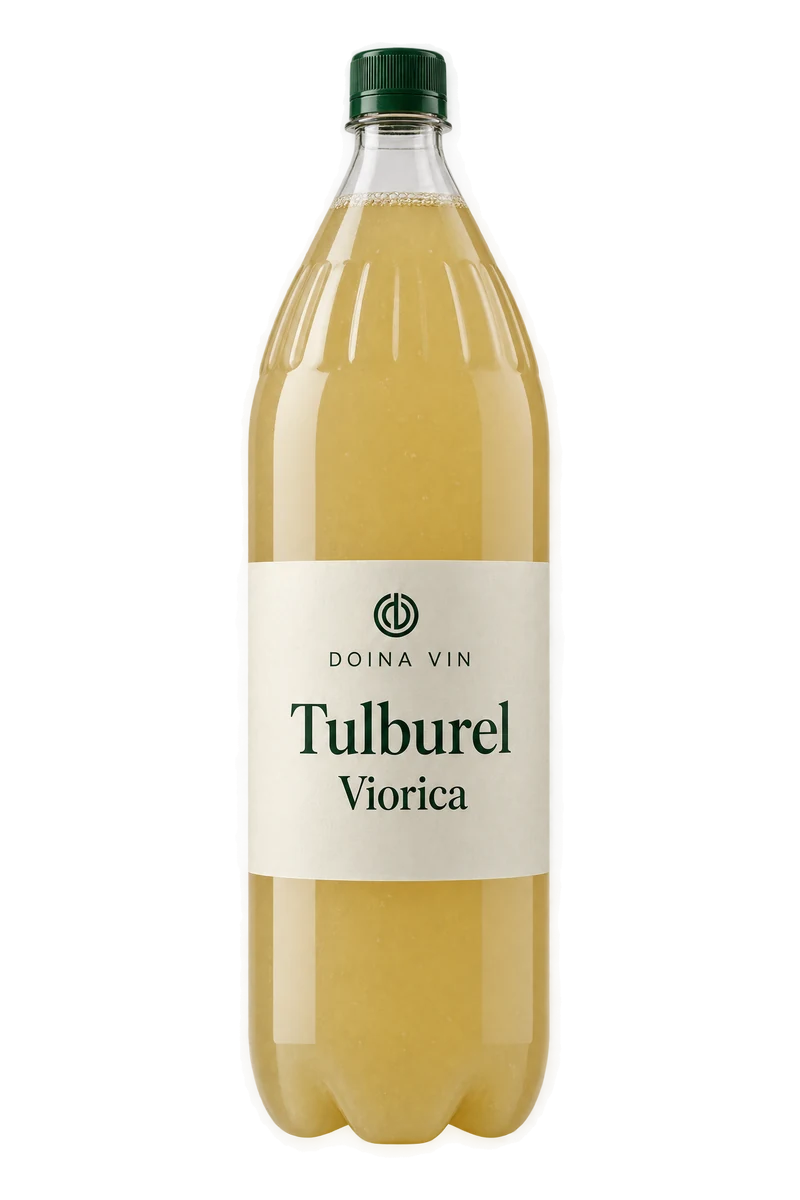
- Seasonal
White tulburel
Viorica
Buy in one clickOne click150 MDL
-
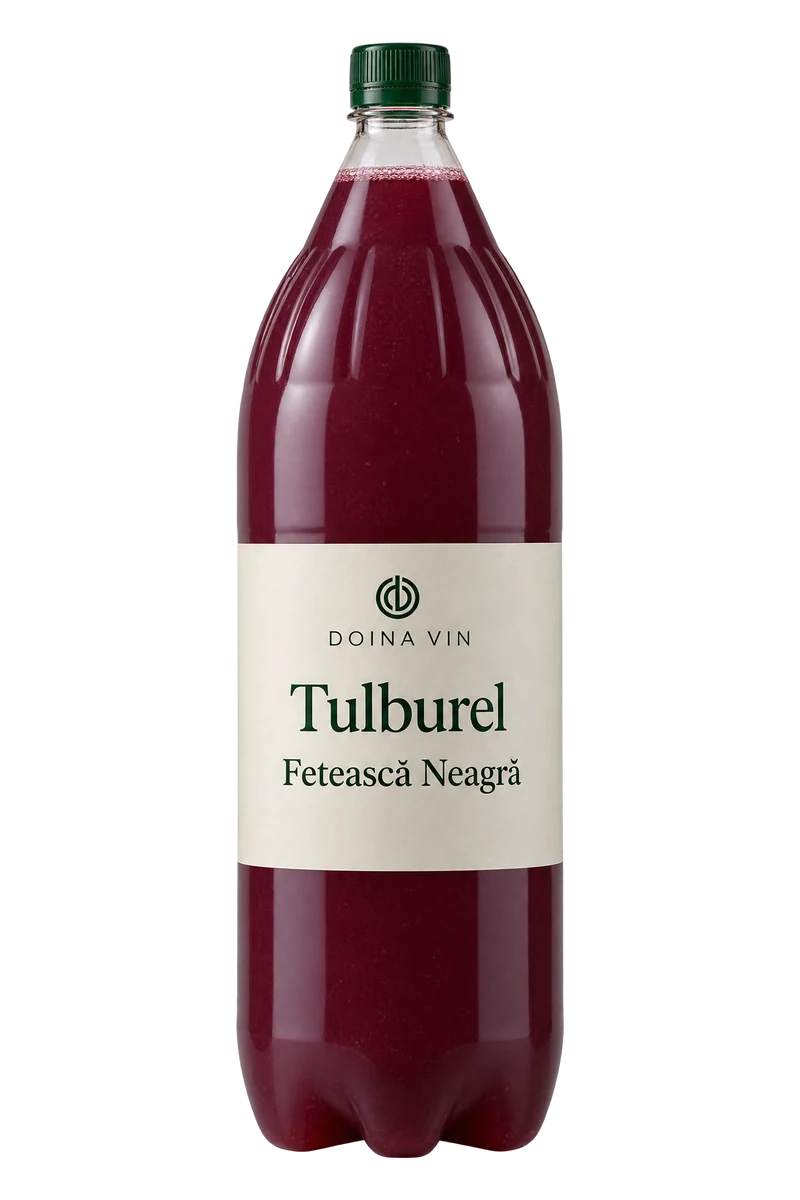
- Seasonal
Red tulburel
Fetească Neagră
Buy in one clickOne click150 MDL
-
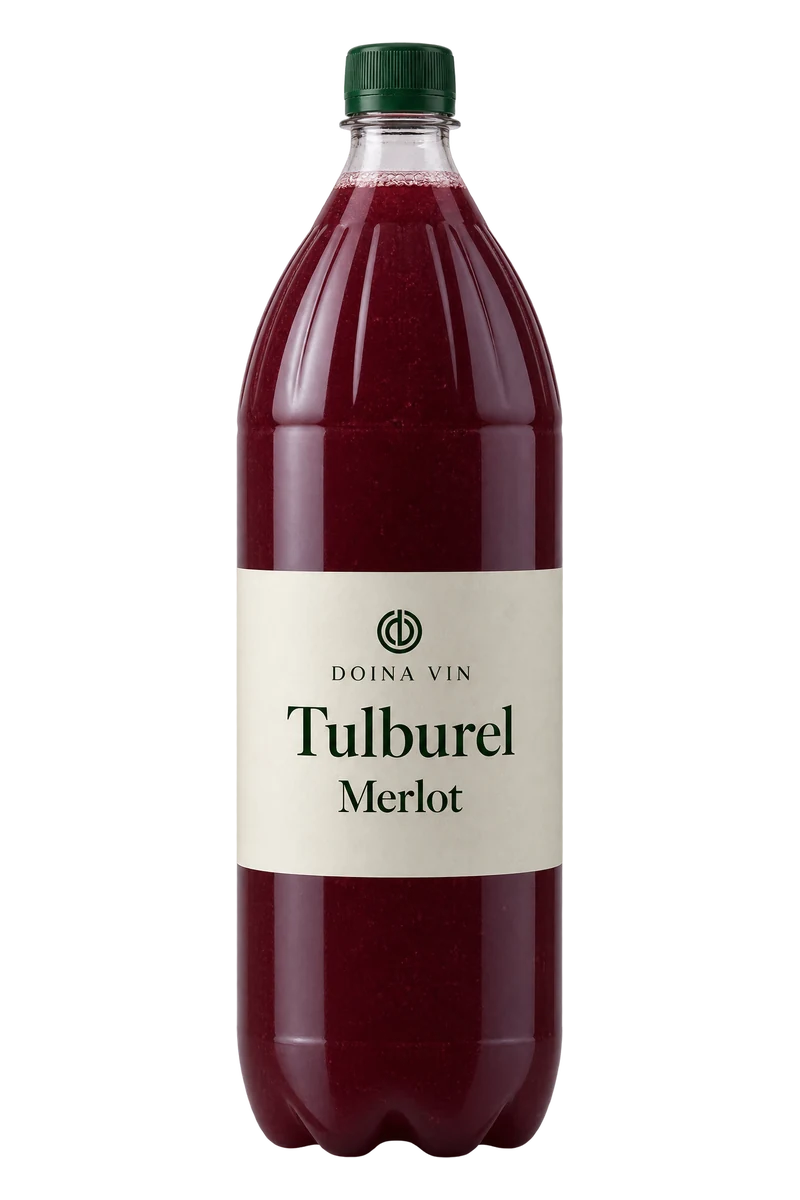
- Seasonal
Red tulburel
Merlot
Buy in one clickOne click150 MDL
2 L PET bottles. Seasonal: on sale while stocks last. Delivery and payment
What tulburel is
Tulburel forms when yeast turns the sugar in grape must into alcohol and carbon dioxide. That gives the fine bubbles and the saying that the wine is “boiling”, and the cloudiness comes from the yeast and fine grape particles that have not settled yet. [4] The name says the same: “tulburel” comes from the Romanian “tulbure”, cloudy. [1]
Moldova’s 2006 law on vines and wine defined tulburel as a wine still finishing its alcoholic fermentation, not separated from its yeast and drunk in the year of the harvest. [2] Today’s rules call it “new wine still in fermentation (tulburel)”. [3] Under the same law, “young wine” (vin tânăr) is something else: a finished wine bottled and sold in the harvest year. In everyday speech, though, tulburel is also called must, new wine or young wine, and in Russian тулбурел, муст or молодое вино. [9, 12]
Facts about tulburel
- The word “tulburel” is “tulbure” (cloudy) plus the diminutive suffix “-el”; the dictionary defines it as new wine that has not yet cleared. [1]
- Tulburel forms when yeast turns the sugar in grape must into alcohol and carbon dioxide, which gives it bubbles and foam. [4]
- Tulburel is cloudy because the yeast and fine grape particles have not yet settled. [4]
- As tulburel ferments, sugar falls and alcohol rises day by day; a Romanian guide gives 2–5% alcohol on days 3–6 and 6–9% on days 7–14. [5, 4]
- Published figures for new wine still in fermentation run from about 4% to 11% alcohol. [12, 13]
- Moldova’s Law no. 57 of 10 March 2006 on vines and wine defined “vin tulburel” as a wine still fermenting, not separated from its yeast and released in the harvest year, separate from “young wine”. [2]
- Moldova’s wine-market regulation (Government Decision no. 356/2015) calls it “new wine still in fermentation (tulburel)” and requires its alcohol content on the label. [3]
- Moldova’s National Wine Day is held on the first weekend of October; at its 25th edition, on 3–4 October 2026, the longest queues were at the tulburel stalls, where 1.5 litres cost 80–120 lei depending on the grape. [7, 8]
- At National Wine Day, must and tulburel are usually bought in 1.5-litre plastic bottles. [9]
- At the “Tulburel” young-wine festival at Moldexpo in 2018, tulburel was served with national dishes, grilled food and plăcinte. [11]
- Tulburel keeps fermenting in the bottle and builds up pressure, so the bottle is never sealed airtight. [6, 5]
- Cold slows the fermentation, which is why new wine is kept cold and drunk within a few days. [16, 12]
- In Germany the same kind of drink is called Federweißer and is sold from early September to the end of October. [14, 15]
- In Austria, Sturm may be sold from 1 August to 31 December, and in Czechia, burčák from 1 August to 30 November, from local grapes only. [17, 18]
- Beaujolais Nouveau, released on the third Thursday of November, and vino novello, released on 30 October, are finished wines, not wine still fermenting like tulburel. [22, 21]
Tulburel and young wines of other countries
Tulburel has relatives all over Europe. Some are, like it, wine that is still fermenting; others are young but finished wines.
| Drink | Country | What it is | When it is sold |
|---|---|---|---|
| Tulburel | Moldova, Romania | New wine still fermenting, cloudy, on its yeast | In the harvest year; in Moldova in autumn, peaking at Wine Day (first weekend of October) [2, 7] |
| Federweißer | Germany | Partially fermented grape must | Early September to the end of October [14] |
| Sturm | Austria | Partially fermented must | 1 August – 31 December [17] |
| Burčák | Czechia | Partially fermented must | 1 August – 30 November [18] |
| Vino novello | Italy | Finished wine, at least 11% alcohol | From 30 October [21] |
| Beaujolais Nouveau | France | Finished wine | From the third Thursday of November [22] |
| Heuriger | Austria | Wine of the latest harvest, finished | Keeps the name until St Martin’s Day (11 November) of the following year [23] |
Other names for tulburel
The same kind of drink has a different name from one region to the next. Some names mean exactly tulburel; others are only related.
| Name | Language, country | What it is |
|---|---|---|
| tulburel (turburel) | Romanian; Moldova, Romania | Same thing. New wine that has not yet cleared. [1] |
| vin nou aflat încă în fermentare | Romanian; Moldova (regulation) | Same thing. Tulburel’s current legal name: new wine still in fermentation. [3] |
| тулбурел | Russian; Moldova | Same thing. The same word in Cyrillic. [12] |
| муст | Russian; Moldova | Same, earlier stage. Sweet tulburel at the start of fermentation. [9] |
| must, must de poamă | Romanian; Moldova | Related, not identical. Legally grape juice with at most 1% alcohol; in speech, also sweet tulburel at the start. [2] |
| vin tânăr | Romanian; Moldova (law) | Related, not identical. A finished wine bottled and sold in the harvest year; in speech, sometimes tulburel too. [2] |
| молодое вино | Russian | Related, not identical. “Young wine”: in speech, tulburel too; in Moldovan law, a separate category. [2] |
| мутное вино, cloudy wine | Russian, English | Ambiguous. “Cloudy wine”: searches are mostly about faulty wine. |
| young wine, new wine | English | Related. General names for wine of the latest harvest. [21] |
| Federweißer (Neuer Süßer, Rauscher, Bremser) | German; Germany | Same thing. Partially fermented grape must; the red is called Federroter. [13] |
| Sturm | German; Austria | Same thing. Partially fermented must from Austrian grapes. [17] |
| burčák, burčiak | Czech, Slovak; Czechia, Slovakia | Same thing. Partially fermented must from local grapes. [18, 19] |
| vin bourru | French; France | Same thing. Fermenting, cloudy must that keeps a few days. [20] |
| vino novello | Italian; Italy | Related, not identical. A finished young wine, released on 30 October. [21] |
| Beaujolais nouveau (vin primeur) | French; France | Related, not identical. A finished young wine, released on the third Thursday of November. [22] |
| Heuriger | German; Austria | Related, not identical. Wine of the latest harvest, and the tavern that serves it. [23] |
How to keep and serve it
- Keep the bottle in the fridge, standing upright: cold slows the fermentation. [16]
- Do not screw the cap on tight: tulburel can keep fermenting and build up pressure in the bottle. [6, 5]
- Drink it cold and fresh, within a few days. [12, 16]
- The taste changes from day to day: as it ferments, it becomes less sweet and stronger. [4]
- Sweet and easy to drink as it is, tulburel contains alcohol. If you drink, do not drive. [4, 25]
What to eat with tulburel
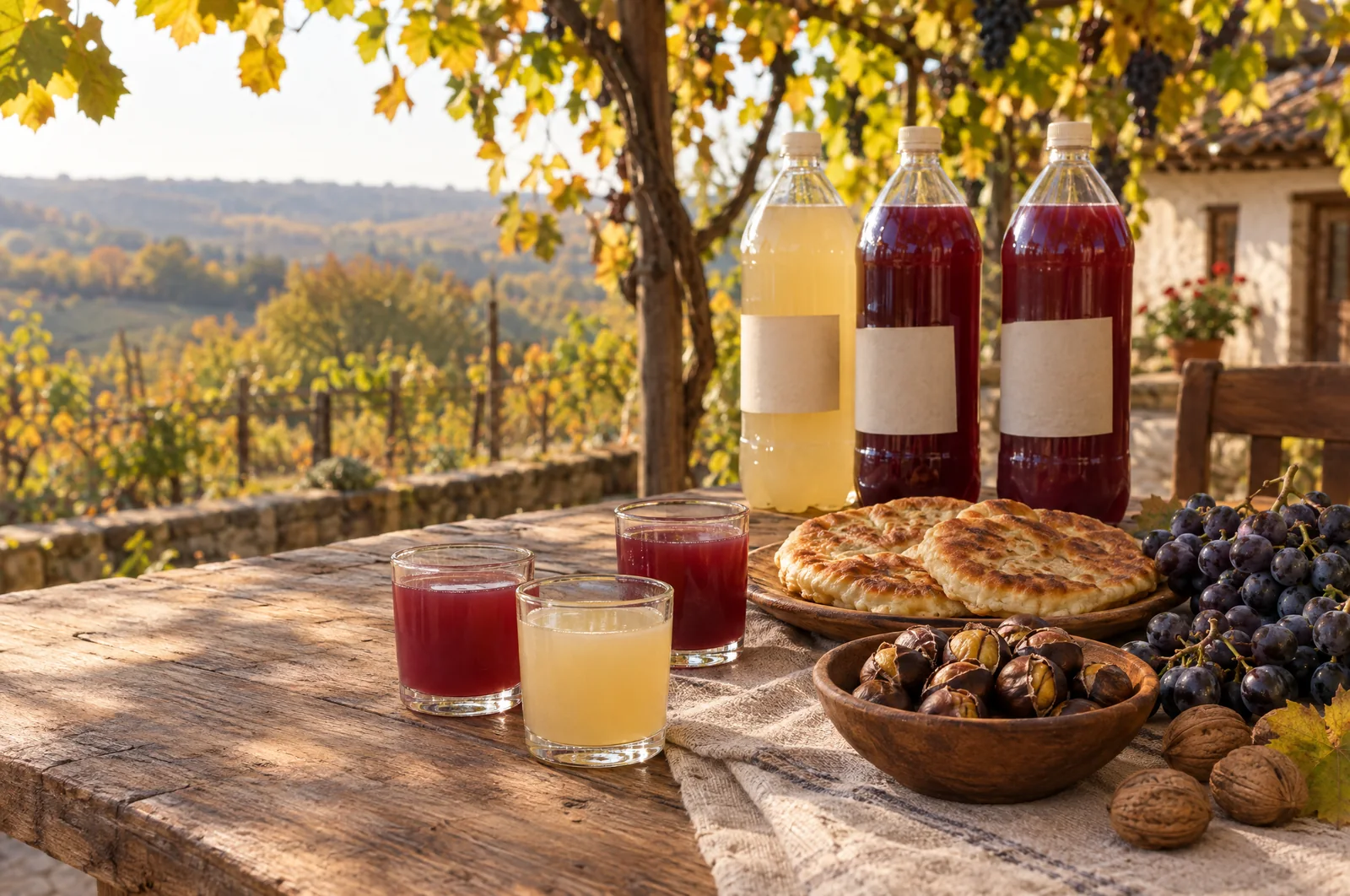
In Moldova, tulburel is drunk at the table with traditional food: at the “Tulburel” festival at Moldexpo it was served with grilled dishes and plăcinte, [11] and at National Wine Day the stalls next to the tulburel sell skewers, mititei and plăcinte. [10, 9] In Germany, Federweißer goes with onion tart (Zwiebelkuchen) or roasted chestnuts; [14] chestnuts are served with new wine in France too. [24]
Tulburel season
Tulburel exists only in the year of the harvest: in Moldova it appears in autumn, with the grape harvest, and the season peaks at National Wine Day on the first weekend of October. [2, 7] Fermentation goes on, so within a few weeks today’s tulburel becomes young wine. [5] That is why we sell it only while this autumn’s stock lasts.
FAQ
What is tulburel?
Tulburel is Moldova’s young wine that is still fermenting: cloudy with its yeast, lightly fizzy and drunk in the year of the harvest. Moldovan rules call it “new wine still in fermentation (tulburel)”.
Is tulburel wine or must?
Legally it is wine: a category of its own, new wine still in fermentation. Grape must has at most 1% alcohol, although in speech the sweet tulburel at the start is called must too.
Why is tulburel cloudy?
Because the yeast and fine grape particles have not settled yet. Hence the name: “tulburel” comes from “tulbure”, cloudy.
How strong is tulburel?
It depends on how far it has fermented: the alcohol rises day by day. Published figures for new wine run from about 4% to 11% alcohol.
How long does tulburel keep?
Not long: new wine is kept in the fridge, upright, and drunk within a few days, while it is fresh.
Why is a bottle of tulburel never closed tight?
Tulburel keeps fermenting in the bottle and builds up pressure; an airtight bottle can burst. That is why it is never sealed.
When is tulburel season?
In autumn, in the year of the harvest; it peaks at National Wine Day on the first weekend of October. Our tulburel is on sale while stocks last.
What do you eat with tulburel?
Traditional food: plăcinte, grilled skewers and mititei. In Germany the same kind of wine goes with onion tart or roasted chestnuts.
What is tulburel called in other countries?
Federweißer in Germany, Sturm in Austria, burčák in Czechia and vin bourru in France. Beaujolais Nouveau and vino novello are young wines too, but finished ones, not wine still fermenting.
Can I drive after a glass of tulburel?
No. Tulburel contains alcohol even when it tastes sweet and easy, and Moldova’s legal limit for drivers is 0.3 g/l of alcohol in the blood. If you drink, do not drive.